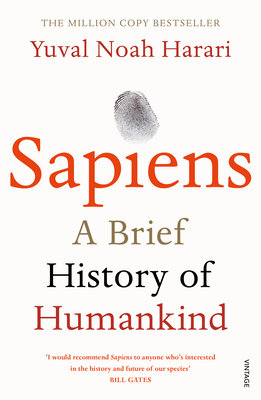
1Sapiens by Yuval Noah Harari
Sapiens is a brief history of humankind, from early humans to the present day, and it's one of the most popular history books of the century. Yuval Noah Harari asks big questions about how one species came to run the planet, through farming, money, empires and science. It's an easy read for a history buff who likes the long view.
Pros
- Covers the whole sweep of human history.
- Easy to read.
- Sparks plenty of arguments.
Cons
- Many history fans already own it.
- Some historians dispute its broad claims.
View on Amazon UK↗UK listing only in this guide.Amazon price at the time shown. Prices and availability can change; the price on Amazon at purchase applies. Product sources
Amazon UK listing ↗
2The Silk Roads by Peter Frankopan
The Silk Roads turns world history round to face east. Oxford historian Peter Frankopan follows the trade routes that linked Europe and Asia and shows how ideas, religions and empires moved along them, from Buddhism's spread to the wars of the 20th century. It's an international bestseller that makes familiar history look new.
Pros
- Makes familiar history look new.
- International bestseller.
- Sweeping but readable.
View on Amazon UK↗UK listing only in this guide.Amazon price at the time shown. Prices and availability can change; the price on Amazon at purchase applies. Product sources
Bloomsbury product page ↗
3A History of the World in 100 Objects
Neil MacGregor, the former director of the British Museum, tells human history through 100 things people made, from a stone chopping tool found in Africa to modern objects. Each chapter is short, so it's easy to read one object at a time.
Pros
- History told through real objects.
- Short chapters to dip into.
- By a former British Museum director.
Cons
- Hardback editions are heavy.
View on Amazon UK↗UK listing only in this guide.Amazon price at the time shown. Prices and availability can change; the price on Amazon at purchase applies. Product sources
Penguin product page ↗
4AncestryDNA test kit
History gets personal when it's your own family. AncestryDNA is a simple saliva test that maps their origins across thousands of regions and links them with DNA relatives who've also tested. Results arrive in about six to eight weeks, and it's often the start of a family tree project.
Pros
- Shows where their family came from.
- Finds DNA relatives.
- Simple home saliva test.
Cons
- Some features need an Ancestry subscription.
View on Amazon UK↗UK listing only in this guide.Amazon price at the time shown. Prices and availability can change; the price on Amazon at purchase applies. Product sources
Ancestry product page ↗
5Timeline card game
Timeline asks players to place inventions, discoveries and historical events in the right chronological order. The rules take minutes to learn, but a round still tests memory and deduction. This refreshed set has 96 cards and works well as a quick family game.
Pros
- Uses real historical events and inventions.
- Quick to learn and play.
- Contains 96 illustrated cards.
Cons
- It is competitive rather than cooperative.
View on Amazon UK↗UK listing only in this guide.Amazon price at the time shown. Prices and availability can change; the price on Amazon at purchase applies. Product sources
Asmodee product page ↗
What to buy someone who loves history
History buffs usually have a favourite period, so a book that matches it always goes down well. The best gifts for history buffs open up a new angle on the past. A DNA kit makes history personal. A game suits family gatherings.
How we picked these gifts for history buffs
We picked each product for what history buffs enjoy and because it makes sense as a present. The order is our own choice. The pros and cons come from published product details, not customer reviews.
Amazon shows the current price and delivery. Where we've checked that the US listing is the same product, the US link goes there. Otherwise you'll get the UK listing, labelled as such. More about our research.